

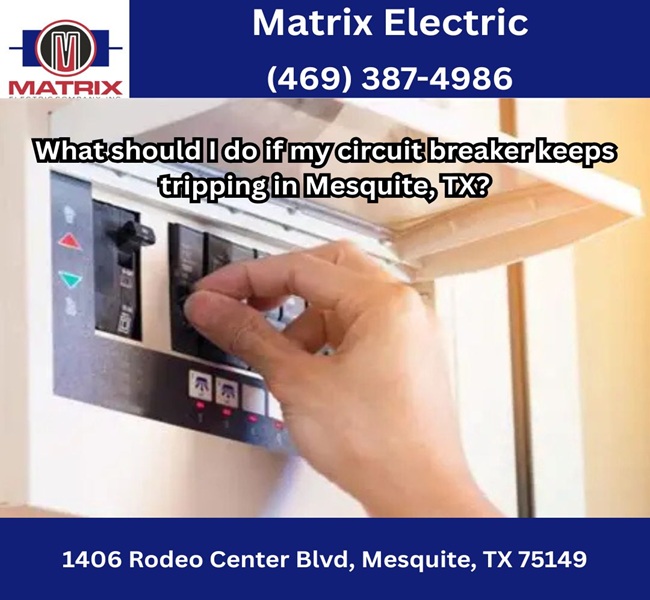
Your circuit breaker keeps tripping because your electrical system is working to protect your home from a potential hazard, but repeated trips signal an underlying problem that needs attention. A circuit breaker trips when it detects excessive current, a short circuit, or a ground fault on a specific circuit. While a single trip might be coincidental, repeated or constant tripping indicates an electrical issue that could range from an overloaded circuit to dangerous wiring problems. For homeowners and property managers in Mesquite, understanding what causes these trips and when to call a professional electrician is crucial for maintaining safety and preventing damage to your electrical system.
Why Your Circuit Breaker Keeps Tripping in Mesquite (What You Need to Know)
Circuit breakers are safety devices designed to interrupt electrical flow when something goes wrong. Think of them as your home’s electrical guardian. When a breaker trips repeatedly, it is not the breaker itself that is failing in most cases, it is the electrical load or condition on that circuit that is unsafe. In Mesquite, where many homes were built between the 1950s and 1990s, older electrical systems sometimes struggle to handle modern power demands from devices like air conditioning units, modern appliances, and home office equipment.
Understanding the relationship between your circuit breaker and the rest of your electrical system helps you make informed decisions. Your main electrical panel contains individual breakers, each protecting a specific circuit. When current on that circuit exceeds its rating (typically 15 or 20 amps for household circuits), the breaker automatically switches off. This is intentional and correct behavior. However, if it happens repeatedly on the same circuit, a problem exists that requires diagnosis.
Common Causes of Repeated Breaker Trips (Residential & Commercial)
Multiple scenarios can cause your circuit breaker to trip repeatedly. Identifying which situation applies to your home is the first step toward resolution. Some causes are minor inconveniences; others pose genuine safety risks.
Overloaded Circuits: The #1 Culprit
Overloaded circuits are the most common reason for repeated breaker trips in both residential and commercial Mesquite properties. An overloaded circuit occurs when you draw more power from a circuit than it is designed to handle.
Testing for overload scenarios
Start by identifying which devices are plugged into the circuit that keeps tripping. High-power appliances like space heaters, hair dryers, or portable AC units draw significant current. When multiple high-draw devices operate simultaneously on the same 15 or 20 amp circuit, the total demand exceeds the circuit’s capacity, triggering the breaker. This is especially common in kitchens, bathrooms, and laundry areas where multiple outlets serve power-hungry appliances. Try unplugging devices from that circuit one at a time, then reset the breaker. If it no longer trips after removing a specific appliance, you have identified your problem. The solution is redistributing devices across different circuits or upgrading that circuit to handle higher loads.
Short Circuits & Ground Faults: Why They’re Serious
While overloading is annoying, short circuits and ground faults are dangerous. A short circuit occurs when a live wire touches a neutral or ground wire, creating a direct path for current that bypasses the intended load. This generates extreme heat and can cause fires. Ground faults happen when current takes an unintended path to the ground, often through moisture or damaged insulation.
Identifying short circuit symptoms
Signs of a short circuit include burning smells near outlets or the electrical panel, visible charring or discoloration on outlets, or the breaker tripping immediately after you reset it even when no devices are plugged in. Ground faults behave similarly but are often associated with moisture, so look for evidence of water near outlets or in attics. If you detect any of these symptoms, do not attempt DIY solutions. Short circuits and ground faults require immediate professional evaluation because of the fire hazard they present.
Aging Wiring & Panel Issues (Common in Mesquite Homes)
Mesquite homes built in earlier decades frequently have aging electrical systems. Older wiring deteriorates over time, and insulation breaks down. Aluminum wiring, common in homes built during the 1960s and 1970s, oxidizes and loses conductivity. When wiring degrades, resistance increases, causing heat buildup and triggering breaker trips as a safety response. Additionally, older electrical panels themselves can develop problems. Components wear out, connections loosen, and the panel may become unable to properly distribute power. If your home was built before 1990 and you are experiencing repeated breaker trips, the underlying issue might be the age of your electrical infrastructure rather than any specific appliance.
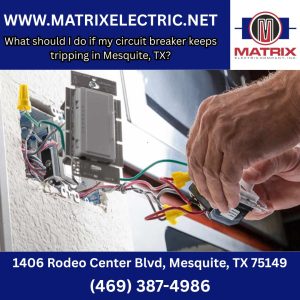
In many cases, Electrical Rewiring addresses the root cause of persistent tripping problems by replacing degraded wiring with modern, safe alternatives that meet current electrical standards.
Safety First: Immediate Steps When Your Breaker Won’t Stop Tripping
When your circuit breaker trips repeatedly, prioritize safety. First, do not ignore the problem hoping it resolves itself. A continuously tripping breaker indicates your electrical system detected a dangerous condition. Here are immediate steps to take:
Turn off all devices plugged into the affected circuit. Then attempt to reset the breaker by switching it fully to the off position, then back to on. If it trips again immediately without any devices connected, a short circuit or ground fault likely exists in the wiring itself. In this case, do not continue resetting the breaker. Leave it in the off position and contact a licensed electrician. If the breaker holds and devices operate normally, you have a different scenario to manage.
If the breaker trips only when you plug in a specific appliance, that appliance is the culprit. Discontinue using that device and arrange for professional repair or replacement. If the breaker trips when multiple devices run simultaneously, you have an overload condition that needs addressing through circuit redistribution or upgrades.
Troubleshooting Your Circuit Breaker (When DIY Inspection Helps vs. When It Doesn’t)
Safe troubleshooting is limited to observation and basic testing. Know the boundary between helpful investigation and dangerous interference.
What Homeowners Can Safely Check
You can safely inspect outlets and devices for visible damage. Look for burns, discoloration, or melting around outlets on the affected circuit. Check if specific appliances cause trips by testing them one at a time. You can verify which circuit serves which outlets by carefully observing which lights go out when you switch off a specific breaker. You can also count and document how many high-power devices share a single circuit. These observations provide valuable information for a professional electrician.
What you should not do: Do not open your electrical panel beyond flipping breakers on and off. The main panel contains live, dangerous voltage. Do not use water or moisture to test connections. Do not assume a professional is unnecessary if the breaker eventually holds after several resets. Intermittent tripping often signals a worsening problem that will deteriorate without proper diagnosis.
What Property Managers Should Document
For rental properties in Mesquite, documentation protects both you and tenants.
Documentation steps for rental properties
Record when the tripping occurs, which circuit is affected, what devices were in use, and how frequently it happens. Note the date, time, and specific circumstances. If a tenant reports the issue, ask them to document the same information. This record becomes essential for your electrician and protects you in case of disputes. Additionally, document maintenance you arrange in response. This history demonstrates that you are maintaining the property to safe, habitable standards as required by Texas property law.
Why Professional Inspection Protects Your Property
A professional electrician brings diagnostic tools and expertise that identify problems invisible to homeowners. They use multimeters to measure voltage and amperage, thermal imaging cameras to spot overheating connections, and testing equipment to detect ground faults. They understand Texas electrical codes and Mesquite specific building requirements. Most importantly, they can determine whether a problem is simple versus dangerous. What seems like a minor inconvenience might be a hidden fire hazard. Professional inspection gives you definitive answers and a clear path forward.
When aging panels become unreliable or fail to support your electrical needs, Electric Panel Replacement provides a comprehensive solution that restores safety and functionality to your entire home electrical system.
| Circuit Breaker Issue | What Homeowners Should Know |
| Overloaded Circuit | Multiple high-power devices drawing current simultaneously; most common cause; manageable through device redistribution |
| Short Circuit | Damaged wiring or faulty appliances creating unintended electrical path; serious fire hazard; requires immediate professional attention |
| Ground Fault | Electrical current taking unintended path to ground, often involving moisture; dangerous; needs professional inspection and testing |
| Aging Electrical System | Common in Mesquite homes built before 1990; degraded wiring insulation or oxidized connections; may require panel or wiring upgrades |
| Faulty Breaker | Breaker mechanism wearing out after years of use; trips even without overload; may need replacement if other causes ruled out |
Texas Electrical Code & Your Circuit Breaker: Local Compliance Matters
Texas electrical installations follow the National Electrical Code (NEC) as adopted and modified by the Texas Department of Licensing and Regulation. Mesquite also has specific building codes that apply to residential and commercial properties. These codes dictate circuit capacity, breaker sizing, wiring gauge, and safety requirements. Older homes built before current code adoption may have installations that meet codes from their construction era but fall short of modern safety standards.
When you experience repeated breaker trips in an older Mesquite home, the underlying cause might be that your electrical system is simply inadequate for modern usage patterns. Your home may have been designed for 60 amp or 100 amp service when it now needs 150 or 200 amps to safely power contemporary appliances and devices. This is not a defect; it is the reality of aging infrastructure. Professional electricians understand these code requirements and can advise whether upgrades are necessary to bring your system into full compliance.
Red Flags That Demand Immediate Attention
Local inspection requirements in Texas
Certain breaker tripping scenarios require immediate action and possibly professional inspection mandated by insurance or lending requirements. If you notice burning smells, sparking at outlets, or the breaker tripping immediately after reset with nothing plugged in, your system has a dangerous fault. If a breaker repeatedly trips only when specific appliances are used, that device needs professional repair or replacement. If multiple circuits trip simultaneously, your main panel may have a serious problem. In commercial properties, if breaker trips disrupt business operations frequently, professional assessment is essential to identify root causes and prevent downtime.
How to Prevent Future Circuit Breaker Problems
Prevention requires both awareness and action. First, avoid overloading circuits by being mindful of what you plug into each outlet. Distribute high-power appliances across different circuits rather than concentrating them in one area. Keep electrical devices away from moisture. In bathrooms and kitchens, consider installing ground fault circuit interrupter (GFCI) outlets, which provide additional protection and are now code-required in these areas. Do not use damaged cords or outlets. If you see exposed wiring, burns, or discoloration, discontinue use and call for repair.
Implementing Surge Protection Solutions throughout your home adds critical safeguarding against voltage spikes and electrical surges that can damage sensitive equipment and trigger breaker trips.
Second, have your electrical system professionally inspected periodically, especially if you own an older Mesquite home. An electrician can identify aging wiring, loose connections, and potential hazards before they trigger breaker trips or create dangerous situations. Third, upgrade your panel and circuits if your usage demands have outpaced your system’s capacity. Modern homes use significantly more electricity than homes from previous decades, and your electrical system should reflect your actual needs.
When Your Breaker Trips but Nothing’s Wrong (The Nuance)
Sometimes a circuit breaker trips, but when you reset it, everything works normally without any obvious cause. This does not mean nothing is wrong. Intermittent tripping is often a warning sign that a problem is developing. A loose connection, incipient ground fault, or aging component might cause occasional trips before progressing to consistent problems or dangerous failures. Do not dismiss intermittent tripping as a mystery to ignore. Document when it happens, contact a professional, and let them diagnose the cause. Catching problems early prevents emergencies.
Conclusion
When your circuit breaker keeps tripping in Mesquite, you are experiencing your electrical system’s safety mechanism working as designed, but the underlying cause requires identification and resolution. Whether the problem is an overloaded circuit, a short circuit, a ground fault, aging wiring, or a faulty breaker, the solution depends on accurate diagnosis. You can safely perform basic troubleshooting by identifying which devices are connected, observing patterns, and looking for visible damage. However, determining whether a problem is simple or serious requires professional expertise and diagnostic tools that only a licensed electrician possesses.
The investment in professional inspection protects your home, your family, and your property value. Repeated breaker trips left unaddressed can lead to electrical fires, damaged appliances, and costly emergencies. For comprehensive protection, consider evaluating your full electrical infrastructure, including options like Home Generator Solutions for backup power reliability during outages. Matrix Electric Company Inc. serves Mesquite homeowners and commercial property managers with thorough electrical inspections, accurate diagnostics, and reliable solutions. Whether you need help troubleshooting an intermittent problem or planning a complete panel upgrade to meet modern demands, professional electricians understand local codes, Texas requirements, and the specific challenges of Mesquite properties. Reach out to learn more about how professional electrical inspection and maintenance can keep your system safe and dependable. Visit https://www.matrixelectric.net/ to explore services and connect with experienced electricians who understand your home’s needs.