

Professional electricians follow strict safety standards to protect your home, family, and electrical systems. These standards include adherence to the National Electrical Code (NEC), proper use of personal protective equipment, and rigorous testing protocols. Understanding what safety standards electricians should follow helps you hire qualified professionals and protects your investment. When you work with a certified electrician who prioritizes safety, you’re not just getting a service call; you’re ensuring your electrical system is installed and maintained correctly, reducing fire hazards, electrical shocks, and costly repairs down the road.
Why Safety Standards Matter When You Hire an Electrician
The Real Cost of Cutting Corners on Electrical Safety
Electrical work done without proper safety standards creates genuine risks. Faulty installations can lead to fires, electrical shocks, and damage to your home’s electrical infrastructure. In Texas, where summer heat stresses electrical systems year-round, substandard work becomes even more dangerous. Fires caused by electrical failures are among the most preventable household disasters. When an electrician takes shortcuts or works without following established safety protocols, they’re putting your family at direct risk. Beyond the immediate danger, cutting corners often results in code violations that can complicate insurance claims and create serious liability issues when selling your home.
How Safety Standards Protect Your Home and Family
Safety standards exist because they’ve been tested and refined over decades of real-world electrical work. These protocols address everything from preventing electrical fires to protecting workers from electrocution. When an electrician follows safety standards, they’re using methods proven to protect both people and property. Your home’s electrical system operates continuously, carrying significant current through walls and fixtures. Proper standards ensure this power is managed safely. Grounding systems prevent dangerous electrical shocks. Circuit protection devices stop overloads before they cause fires. Ventilation and spacing requirements prevent overheating. Each standard addresses a specific hazard. When you hire an electrician who respects these standards, you’re benefiting from accumulated knowledge about how to keep electricity working safely in your home.
The Key Safety Standards Electricians Follow
Equipment and Tool Safety Standards
Professional electricians use equipment and tools that meet established safety standards. This includes insulated tools, voltage testers, multimeters, and personal protective equipment designed specifically for electrical work. Tools must be regularly inspected and tested to ensure they haven’t been damaged or compromised. Faulty tools can create hazards rather than prevent them. Electricians working according to safety standards maintain their equipment in proper condition and replace items that show wear or damage. They use tools appropriate to the voltage and type of work being performed. For high-voltage installations, they use specialized equipment rated for the specific conditions. Regular calibration of testing equipment ensures accurate readings when checking voltage, continuity, and ground resistance. This attention to tool maintenance might seem like a small detail, but it’s fundamental to preventing accidents and ensuring accurate work.
Electrical Code Compliance During Installation and Service
The National Electrical Code (NEC) serves as the benchmark for electrical safety across the United States. Texas electricians must follow these codes during every installation and service call. The NEC covers everything from how far outlets must be spaced from water sources to how circuits should be sized for different appliances. These requirements aren’t arbitrary. They’re based on preventing fires, electrical shocks, and system failures. During service work, an electrician following proper standards tests circuits before working on them, ensures the power is properly shut off at the main panel, and verifies their work meets current code requirements. They understand that electrical codes are updated regularly as technology evolves and new hazards are identified. Compliance isn’t just about legal requirements; it’s about protecting the people using the electrical system.
Personal Protective Equipment (PPE) Requirements
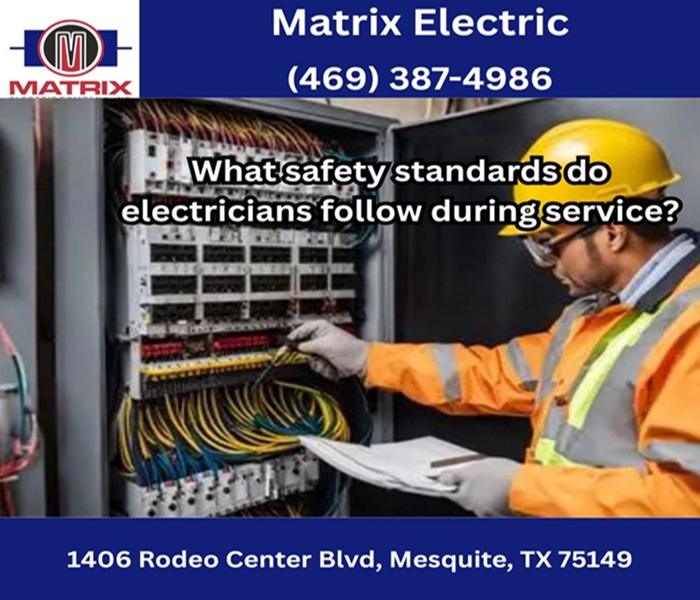
When electricians work with live or potentially live electrical systems, they wear PPE specifically designed for electrical hazards. This includes insulated gloves rated for the voltage being worked with, safety glasses to protect from sparks and debris, and appropriate clothing that won’t catch fire easily. In some situations, arc-rated clothing is required to protect against arc flash incidents. PPE standards specify the testing and certification required for each piece of equipment. Gloves must be tested regularly for damage, as punctures or tears can compromise protection. Hard hats protect against falls and impacts in service environments. Hearing protection may be needed in certain installation situations. The proper PPE varies based on the specific work being performed and the voltage levels involved. A professional electrician knows which PPE is appropriate for each job and wears it consistently, not just when it’s convenient.
How Professional Electricians Stay Current With Safety Requirements
Licensing and Certification Requirements
Texas requires electricians to be licensed, and this licensing process includes demonstrating knowledge of safety standards. Journeymen and master electricians have passed rigorous exams covering electrical theory, codes, and safety practices. This initial licensing shows they understand the fundamentals. However, initial licensing is just the beginning of a professional electrician’s safety commitment. Continuing education requirements mean electricians must regularly update their knowledge as codes change and new technologies emerge. Master electricians in Texas must complete a specific number of continuing education hours to maintain their licenses. This ongoing training ensures that electricians aren’t relying on knowledge that may have become outdated. The licensing and certification requirements serve as verification that an electrician has demonstrated competency in safety standards and continues to maintain that knowledge throughout their career.
Ongoing Training and Industry Updates
Beyond licensing requirements, professional electricians pursue additional training to stay current with evolving safety standards and new technologies. National organizations and trade associations regularly publish updates and guidance on safety best practices. Many electricians complete specialized certifications in areas like solar installation, electric vehicle charging, or advanced diagnostics. These trainings include updated safety protocols for working with these newer systems. Industry conferences and training workshops provide opportunities to learn about emerging hazards and updated safety techniques. Some electricians specialize in specific areas, requiring additional expertise in those safety protocols. A commitment to ongoing learning separates electricians who simply maintain their basic license from those who stay truly current with the field. This continuous improvement mindset directly translates to safer work on your electrical system, as your electrician applies the most recent best practices and safety innovations to your service call.
What You Should Look For When Vetting an Electrician’s Safety Practices
Questions to Ask Your Electrician
When you’re considering hiring an electrician, asking the right questions reveals how seriously they take safety. Ask about their licensing status and how they stay current with code updates. Inquire about their insurance coverage and what it protects. Ask how they approach electrical safety on the job, and what safety equipment they use. A professional electrician will answer these questions directly and can explain their safety practices in terms you can understand. Ask if they test circuits before working on them and how they verify that power is properly disconnected. Ask about their process for checking that completed work meets current code requirements. These conversations give you insight into their approach to safety. A quality electrician won’t view these questions as intrusive; they’ll see them as an opportunity to demonstrate their professionalism and commitment to doing work right.
Documentation and Proof of Standards Compliance
Professional electricians maintain documentation of their compliance with safety standards. This includes proof of current licensing, valid insurance, and records of continuing education or additional certifications. When work is completed, they should provide documentation that the job was completed in compliance with code requirements. For significant electrical work, this might include inspection certificates or permit completion records. Ask to see these documents. A trustworthy electrician will provide them without hesitation. They should be able to explain what testing they performed and what results they found. If work required an inspection, they should have documentation that the inspection passed. This documentation isn’t just paperwork; it’s evidence that the work was done according to established standards. If you ever have questions about the work or need to file an insurance claim, this documentation provides proof that the work was completed properly.
Red Flags That Suggest Inadequate Safety Practices
Certain warning signs indicate an electrician may not be prioritizing safety standards. If an electrician can’t provide proof of current licensing or insurance, that’s a significant red flag. If they seem dismissive of code requirements or suggest that safety standards are unnecessary, that’s concerning. If they don’t carry or use proper testing equipment, or if they don’t seem knowledgeable about electrical codes, these are warning signs. If they’re unwilling to discuss their safety practices or become defensive when you ask questions, that’s another indicator. If they suggest using non-standard materials or methods to save money, walk away. Professional electricians understand that corners cut on safety create dangers that far outweigh any money saved. If an electrician uses damaged or unsafe tools, works without proper PPE, or performs work without testing circuits first, these are serious safety violations. You don’t have to be an expert to spot these red flags. Trust your instincts. Your safety is too important to hire someone who takes shortcuts with electrical work.
Common Safety Oversights (And How Legitimate Electricians Avoid Them)
Improper Grounding Procedures
Grounding is one of the most critical and most commonly compromised safety systems in electrical installations. Proper grounding provides a safe path for electrical current in fault conditions, preventing dangerous shocks and fires. When an electrician cuts corners on grounding, they’re removing a crucial layer of protection. Some older homes may have outdated grounding systems, and improper upgrades can create dangerous situations. A professional electrician tests the grounding system to verify it’s functioning properly. They understand that grounding isn’t just about meeting code; it’s about ensuring that if something goes wrong with an electrical device or installation, the current will safely dissipate into the earth rather than through a person touching that device. Legitimate electricians verify grounding continuity, test ground resistance, and ensure that all components of the grounding system are properly installed and connected. This attention to grounding protects your family from electrical shocks and your home from electrical fires.
Rushing Inspections and Testing
Proper electrical work includes testing to verify that installations are safe and functioning correctly. Some electricians rush through this testing or skip it entirely to save time. A professional electrician understands that testing isn’t optional. They test circuits before working on them to ensure the power is truly off. They verify that outlets and fixtures are properly polarized and grounded. They test load paths to ensure circuits can handle their intended use. They verify that protective devices operate correctly. They inspect connections to ensure they’re tight and secure. This testing takes time, but it’s essential. It’s the difference between work that happens to seem okay and work that has been verified to be safe. When you hire an electrician who prioritizes thorough testing and inspection, you’re getting work that has been verified to meet safety standards, not just work that looks acceptable at first glance.
Working With Outdated or Damaged Equipment
Electrical equipment wears out and becomes unsafe over time. Modern codes often require replacement of outdated components that don’t meet current safety standards. Some electricians work around aging electrical panels, outdated circuit breakers, or corroded components rather than recommending necessary upgrades. While this might keep short-term costs down, it compromises safety. An electrician following proper safety standards recognizes when equipment should be replaced and explains why. They understand that newer circuit protection is more reliable, that modern wiring is safer, and that updated panels can handle the electrical demands of contemporary homes. They don’t just patch problems; they address the underlying issues. If your home’s electrical system has outdated components, a professional electrician will discuss this honestly and explain what should be updated. They won’t pressure you into unnecessary upgrades, but they will make clear recommendations for components that pose genuine safety risks.
| Safety Standard Category | Key Practices and Expectations |
|---|---|
| Personal Protective Equipment | Proper PPE appropriate to voltage and work type, including insulated gloves, safety glasses, appropriate clothing, and specialized gear when needed |
| Testing and Inspection | Verification that power is off before work begins, proper ground resistance testing, continuity checks, circuit load verification, and inspection of all completed connections |
| Code Compliance | Adherence to National Electrical Code requirements, understanding current local requirements, proper spacing and sizing of circuits, and compliance with permit and inspection requirements |
| Tool and Equipment Maintenance | Regular inspection and testing of all tools, proper calibration of voltage testers and multimeters, replacement of damaged equipment, and use of insulated tools appropriate to voltage levels |
| Continuous Learning | Active maintenance of professional licensing, completion of continuing education requirements, pursuit of specialized certifications, and staying informed about code updates and industry changes |

Conclusion
Understanding what safety standards electricians should follow empowers you to make informed decisions when hiring for electrical work. These standards exist because they’ve been tested and proven to protect homes and families from the genuine dangers that electricity poses. They cover everything from the equipment electricians use to how they test their work to verify it’s safe. Professional electricians take these standards seriously because they understand the consequences of shortcuts.
When you hire an electrician who prioritizes safety standards, you’re getting more than just electrical work completed; you’re getting work done by someone who understands their responsibility to protect your home and family. You’re getting work that has been tested and verified to meet code requirements. You’re getting the peace of mind that comes from knowing electrical work was completed by someone who stayed current with evolving standards and best practices.
The electricians at Matrix Electric Company Inc. approach every service call with safety standards at the forefront. They maintain current licensing, carry insurance, use proper equipment and testing protocols, and stay informed about code updates and safety innovations. They’re committed to doing electrical work the right way, not the quick way.
If you need electrical service or have questions about your home’s electrical system, reach out to Matrix Electric Company Inc. Visit their website at matrixelectric.net to learn more about their services, or contact them directly to discuss your electrical needs. When you work with professionals who prioritize safety standards, you’re investing in the long-term protection and reliability of your home’s electrical system.